

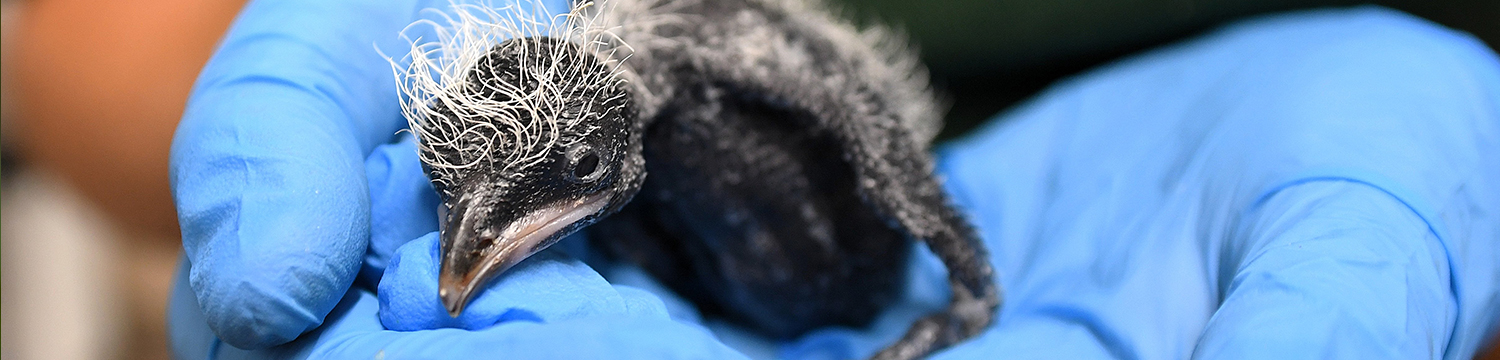
Cotswold Wildlife Park is celebrating a hat-trick of first-time breeding successes, with chicks recently welcomed from its Blacksmith Plovers, Emerald Doves and Greater Coucals. This marks the first successful breeding for each of these species in the collection’s history.
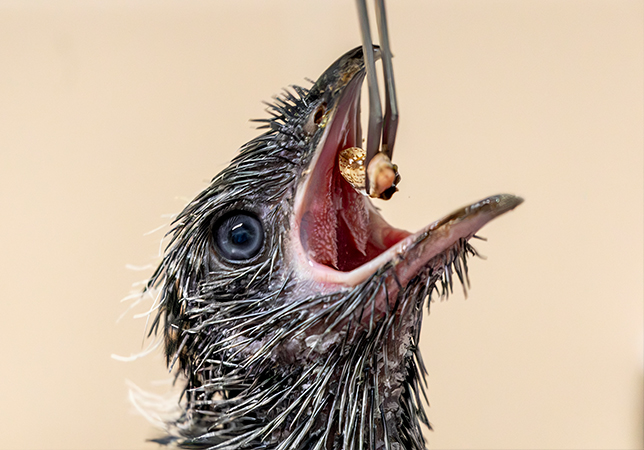
Skunk when he was a little older feeding. Photo credit: Philip Joyce
Remarkably, all three produced more than one clutch, much to the delight of their keepers. The Emerald Doves and Blacksmith Plovers successfully parent-reared their chicks, while the Greater Coucals required a different approach. As the adult birds proved less capable parents, the Bird Section made the decision to hand-rear the young, giving them the best chance of survival. This is the first time this species has been hand-reared by a UK zoological collection.
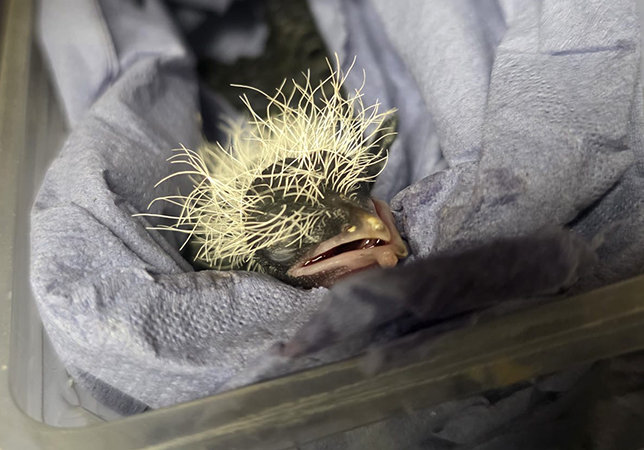
Skunk aged 3 days old. Photo credit: Bird Keeper Laura Spooner
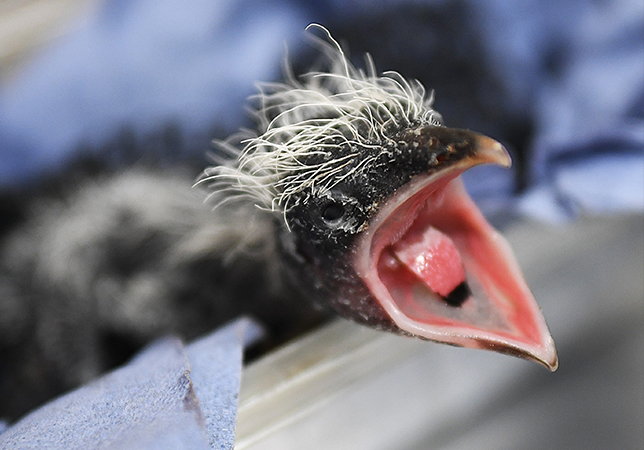
First Successfully Hand Reared Greater Coucal Bird. Photo credit: Paul Nicholls Photography
First Successfully Hand Reared Greater Coucal Bird. Photo credit: Paul Nicholls PhotographyThe first Greater Coucal chick (pictured above), with its black body and impressive crest of white, downy feathers, was named ‘Skunk’ due to its resemblance to the black-and-white mammal. Cared for in the Park’s dedicated incubation facility, the newly hatched chick, with its voracious appetite, initially required feeding every two hours during the day. Weighing just 10.9 grams at hatching, the chick has since grown rapidly and now weighs 240 grams, reaching the size of an adult in just over a month. Two further eggs were laid by the parents and were also hand-reared by the team. The chicks, named Badger and Bodger, have now outgrown their incubator and have joined their older sibling in an off-show aviary, still under the watchful eye of keepers.
Cotswold Wildlife Park is the only UK zoological collection, and one of just two zoological collections globally, to keep this species.
Elsewhere at the Park, the Blacksmith Plovers recently surprised keepers with their breeding efforts. Head Keeper of Cotswold Wildlife Park, Natalie Horner, said: ‘We’ve had a great bird breeding season this year including two clutches of Blacksmith Plover chicks (one pictured below). Three chicks in each clutch! They have all now fully fledged and moved into their own aviaries off show.”
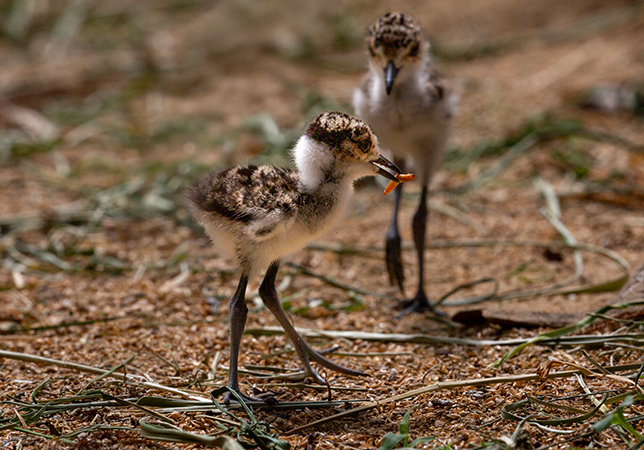
Blacksmith Plover chicks. Photo credit: Philip Joyce
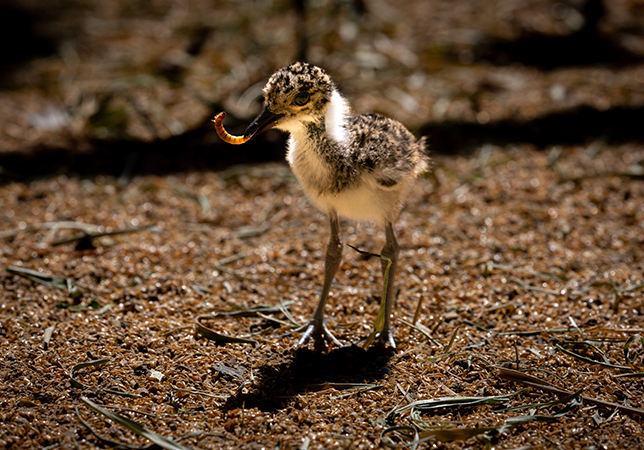
Blacksmith Plover chick with a worm. Photo credit: Philip Joyce
The Park has shared never-before-seen footage capturing the moment the chicks made their first appearance. Volunteer Animal Keeper Annabelle Hart placed camera traps near the nest in the hope of capturing something special. After recording more than 36 hours of footage, she was delighted to discover that she had managed to film the moment the three tiny chicks emerged from beneath their mother on the nest.
The Park is one of only two UK zoological collections to have bred this species in the last year and is one of seven collections in Britain to exhibit them.
Natalie adds: “Our Emerald Doves in the Tropical House have had a bumper year too with three squabs successfully reared and more expected, with pairs still sitting. They are a very relaxed species, with one of our pairs nesting right next to the public pathway, giving our visitors a close look at the incubation and rearing process. We have also successfully hand-reared three Greater Coucal chicks who are all now fully fledged and independent. We are the only zoological collection in the UK to hold this species and the first to breed them in many decades. The chicks hatch with the most amazing feather composition, giving them a rather unique look. Their striking black-and-white colouring has certainly inspired their names and they really are some of the most memorable-looking chicks we’ve ever hand-reared!”.
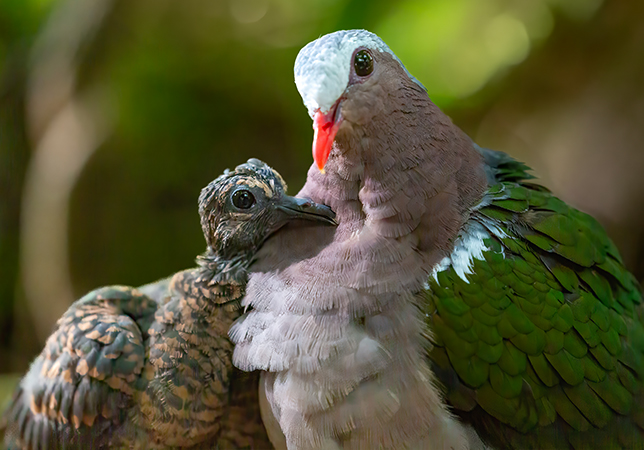
Emerald Dove chick and its mum. Photo credit: Philip Joyce
Award-winning photographer Philip Joyce captured images of the new arrivals. They include a tender moment between an Emerald Dove squab and its mother inside the Tropical House, newly hatched Blacksmith Plover chicks exploring their enclosure on their distinctive, stilt-like legs, and the rather prehistoric-looking Coucal chicks. Perhaps unsurprisingly, given that birds are the only surviving dinosaurs and direct descendants of their long-extinct relatives – a fascinating reminder of the remarkable history shared by all birds.
Dinosaurs of the air
The link between birds and dinosaurs has been extensively explored in books and scientific studies, most recently by palaeontologist Dr Stephen Brusatte from the University of Edinburgh. His acclaimed 2026 book, The Story of Birds, begins with one of the most striking facts in evolutionary biology: birds are dinosaurs. The book explores how modern birds evolved directly from dinosaurs and traces their 150-million-year history, from their origins among small, carnivorous dinosaurs to the more than 10,000 species that thrive today. They are believed to be the only true descendants of their prehistoric forebears.
Additional information:
Greater Coucal (Centropus sinensis)
- The earliest recorded captive breeding of a Greater Coucal in the UK dates to 1928, when W. Shore Baily successfully bred the species in his private collection†. The parent-reared chick developed rapidly: two weeks after hatching, Baily described it as “about the size of a blackbird” and still covered in long white filaments; a week later, it was approximately the size of a Jackdaw and, within a month, had left the nest. Baily recorded that he believed this was the first time the species had been bred in captivity in England.
- The last recorded breeding success with this species at a UK zoological collection was in 1992, at the now-closed Rode Bird Garden, where one chick was parent-reared.
- Also known as the Crow Pheasant, the Greater Coucal is actually a member of the Cuckoo family. A weak flyer, it is often seen clambering through vegetation or walking on the ground while foraging for food.
- Their low, booming ‘coop-coop-coop’ call is associated with spirits and omens across their native range in the Indian Subcontinent and Southeast Asia.
Blacksmith Plover (Vanellus armatus)
- The Blacksmith Plover takes its name from its distinctive metallic ‘tink-tink-tink’ alarm call, which has been likened to the sound of a blacksmith’s hammer striking an anvil. HQ footage of the call is available in the email link.
- Despite its small size, the Blacksmith Plover will fearlessly defend its nesting site, even attempting to drive off animals as large as Elephants in its native range of Sub-Saharan Africa.
- Plover chicks leave the nest almost immediately after hatching and remain close to their parents, taking shelter beneath their mother when needed.
- Their stilt-like legs help them keep pace with their parents and evade potential predators.
- After around four to five weeks, the chicks are large enough to fly and become independent from their parents.
- The Park’s breeding pair are on display in an exhibit shared with Southern Masked Weavers, located adjacent to the Tropical House.
Emerald Dove (Chalcophaps indica)
- Emerald Doves are named for their striking, iridescent emerald-green plumage.
- Both parents share incubation, which lasts around two weeks.
- The young are altricial when they hatch, meaning they are weak, blind, featherless, immobile and unable to regulate their own body temperature.
- Chicks fledge at around 12 to 13 days old.
- Their stunning plumage and soothing call make them sought after for the cage-bird trade. They are often trapped for this purpose, posing a threat to the species’ survival in the wild.