

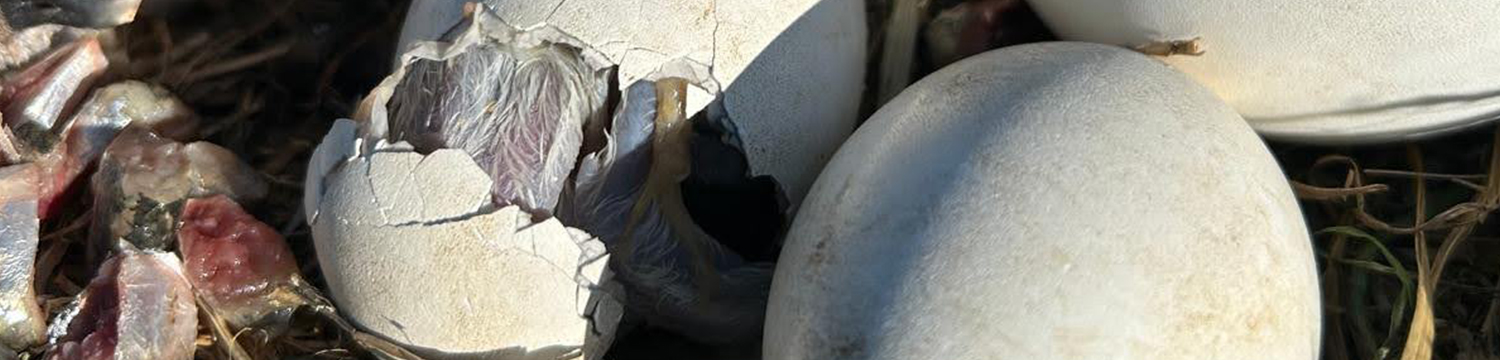
Cotswold Wildlife Park is celebrating the most successful White Stork breeding season in its history, with an impressive 49 chicks bred at the collection this year. These young birds will play an important role in the rewilding of Britain’s skies.
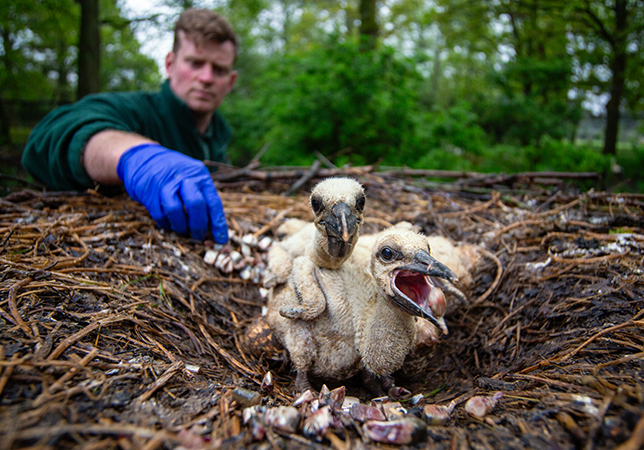
Photo credit: Philip Joyce
For the ninth consecutive year, the Park has successfully hatched and reared chicks for one of the UK’s most ambitious rewilding programmes – The White Stork Project. This pioneering scheme aims to re-establish a wild, breeding population of White Storks with at least 50 breeding pairs across the south of England by 2030. It is the first rewilding programme of its kind in the UK. Cotswold Wildlife Park has now bred 280 White Storks for the project, making a significant contribution to efforts to restore this iconic species to Britain.
Along with project partners, the Roy Dennis Wildlife Foundation, Knepp Castle Estate and private landowners in Sussex, Cotswold Wildlife Park has been involved with the White Stork Project since its inception in 2016. This year also marks a significant milestone, as the White Stork Project celebrates its tenth anniversary.
Thanks to the experience and expertise of the Park’s husbandry team, the number of chicks bred at the collection has increased year on year, with this year’s chicks hatching in May. The early stages of a chick’s development are particularly critical, with careful monitoring and hands-on care helping to give each young bird the best possible start. Close observation begins before the chicks even hatch, with the team ensuring that nests are completed to their satisfaction and keeping a close eye on the birds throughout the egg-laying period.
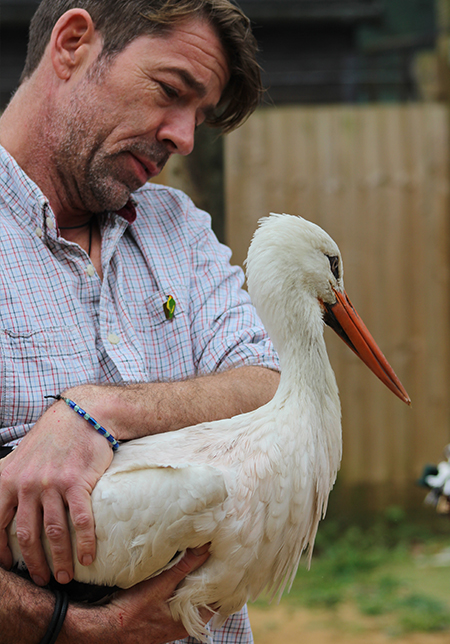
Jamie Craig (pictured above), Curator and Managing Director of Cotswold Wildlife Park, explains: “After approximately 35 days, the chicks will hatch and the keepers then assume the role of ‘fairy godmother’ to the chicks and the adults. Although the adults will bring a good supply of food to the nest for the young, the keepers also assist feed – visiting each nest daily with quantities of finely chopped feed items, usually fish and insects, to ensure that each chick’s chance of survival is optimised, and the workload of the parents with large clutches is not too exhausting. The young birds grow rapidly and by around two months of age, the birds will fledge the nest and become independent.”
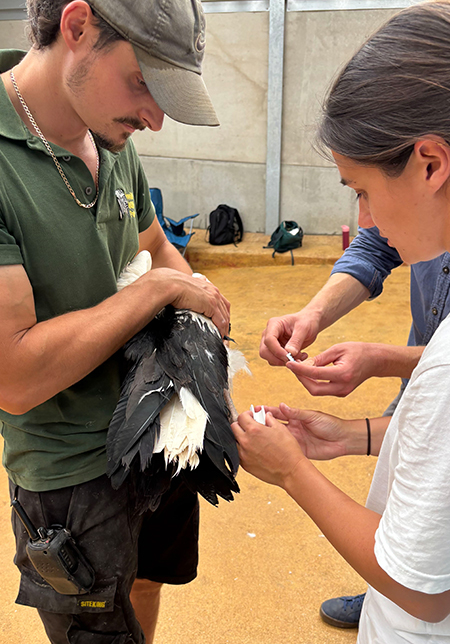
Photo credit: White Stork Project
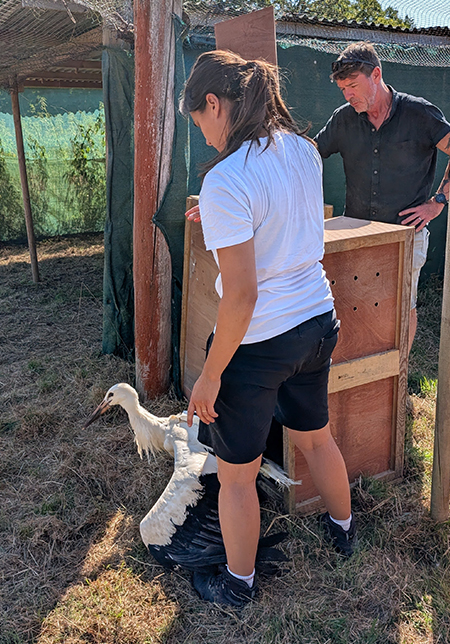
Once they have left the nest, the juveniles are separated from the adults, sexed and given identification rings. After a two-week settling period to ensure all birds are strong and healthy, they are transferred to one of the release pens in Sussex. Months of preparation ultimately culminate in the release of the young birds into the wild, marking the end of one journey and the beginning of another as they embark on their inaugural southward migration.
Jamie Craig adds: “Watching our young storks hatch, grow at the Park and then be transferred to Knepp is always a proud moment, but when they are finally released and take to the air to soar the thermals, it’s a sight that always inspires us for the future. It is the pinnacle of what we do and something I never tire of.”
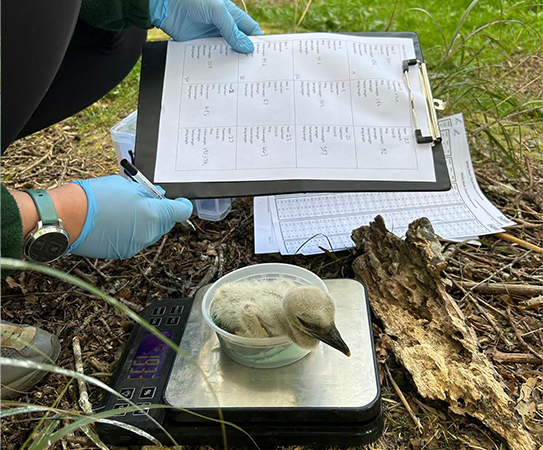
This year also marks a new era in bird tracking. In previous years, several storks were fitted with GPS trackers to monitor their movements after release. Now, the project has taken an exciting technological step forward, introducing a new approach to tracking the birds’ progress. Beth Peacock, Conservation Officer at Cotswold Wildlife Park, explains: “For the first time, every bird is carrying either a satellite tracker or one of the new e-ring nanotags, which will help us build a much clearer picture of their movements, survival and behaviour after release, while making it possible to monitor more birds than ever before. This year we also took weekly weight, wing length and beak length measurements from a sample of the chicks born here, from hatching until they were ready for release, contributing to research with the University of East Anglia and helping build a stronger understanding of White Stork chick development.”
Beth adds: “It is especially encouraging that two birds bred here have migrated, returned to Knepp and attempted to breed, showing just how important these releases are in helping restore White Storks to the landscape. It is a real privilege to be so closely involved in such an exciting project to bring this iconic bird back to our skies.”
The young birds released this year are expected to begin their first migration towards the end of August, although the timing can vary considerably. In previous years, some individuals have remained in the UK until early October before embarking on their southward journey.
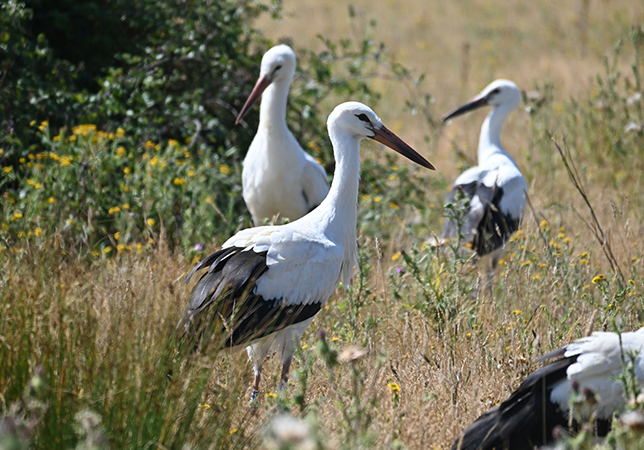
All birds involved in the White Stork Project have unique coloured rings on their legs. Anyone who spots a White Stork in the British countryside can report their sightings here: www.whitestorkproject.org/report-a-sighting.
Protecting wildlife beyond the Park
Cotswold Wildlife Park is actively involved in conservation in the wild. The White Stork Project is one of several conservation programmes the Park supports. Please visit www.cotswoldwildlifepark.co.uk/conservation for more information.
The Park’s breeding group of White Storks are on show in the walk-through area next to the Children’s Farmyard.
Cotswold Wildlife Park is currently open from 10.00am to 6:00pm every day during the summer, with last admission at 4.00pm