

As autumn comes creeping in and Halloween is upon us, we would like to reacquaint you with some of our ‘spookier’ species. In the Little Africa exhibit you may be lucky enough to catch a glimpse of a ghost on your next visit! Our resident Bush Baby, named Ghost because of his distinctive white fur, shares a nocturnal enclosure with the Jumping Rats.
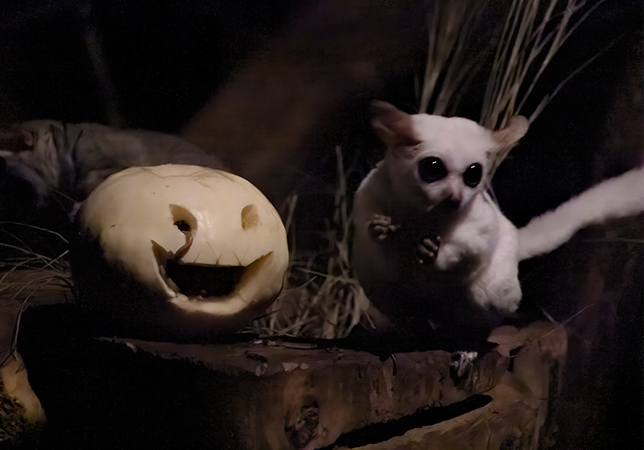
Photo credit: Philip Joyce
Along with other animals across the Park, Ghost has enjoyed some Halloween-themed enrichment in the form of a ‘ghost’ pumpkin full of tasty Bush Baby delicacies! When keepers provide certain animals with a food that isn’t part of their daily diet here (but is still appropriate for them) it can be a simple way of ensuring feeding time is stimulating and interesting for them, and Ghost very much enjoyed his treat.
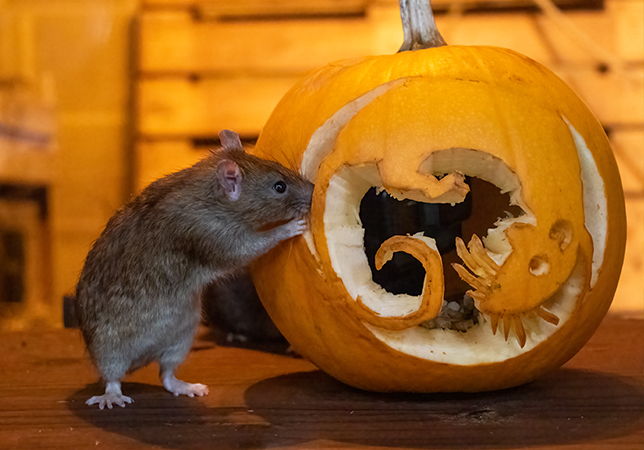
Photo credit: Philip Joyce
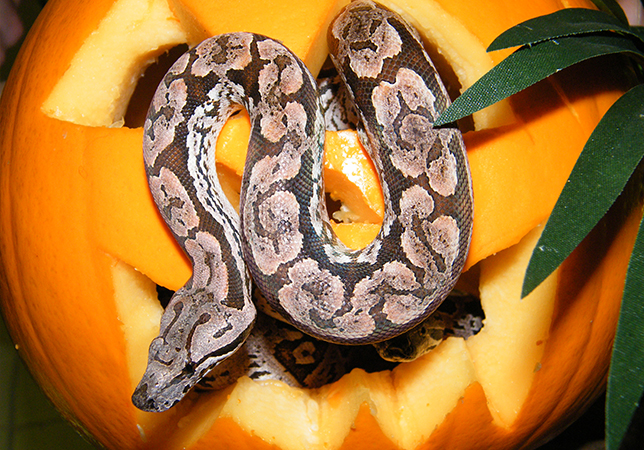
Photo credit: Philip Joyce
Pictured: One of the Brown Rats in the barn at the Children’s Farmyard enjoying a rat-themed pumpkin carved by keepers and Macaroni the Royal Python fully exploring his pumpkin.
In the Bat House exhibit opposite the Reptile House, you will be able to see the Straw-Coloured and Seba’s Fruit Bat colonies co-habiting in the enclosure.

This exhibit is rather special as there are viewing windows at floor and roof level, allowing visitors different views of how these animals move around the enclosure and how they feed.
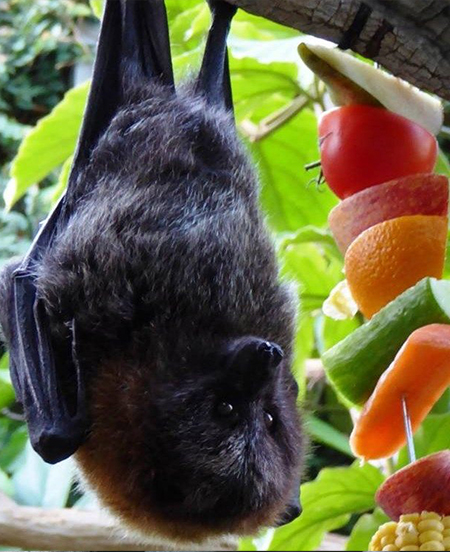 Over in the Tropical House residing alongside the sloths, you can also spot the large Rodrigues Fruit Bats hanging from the roof as they roost.
DID YOU KNOW?
The annual migration of Straw-Coloured Fruit Bats, to sites like Kasanka National Park in Zambia, is one of the largest mammal migrations on Earth, with sometimes over 10 million bats arriving.
Our final ‘spooky’ species includes some of the spiders housed in the Invertebrate House opposite the play park.
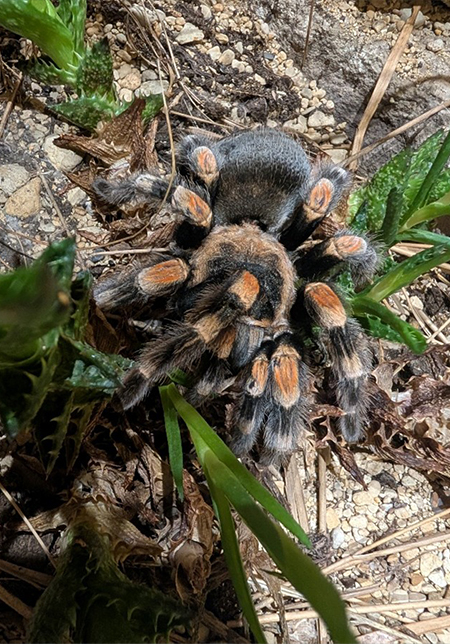
All five spider species in the Invertebrate House are looked after by the Reptiles team here at the Park, and Head of Reptiles Meg said:
“All of our spiders on show currently are females and female spiders are usually larger than the males and can live a lot longer. The lifespan of a male tarantula is generally 3-5 years, whereas females can live up to around 20 years old! Our Chilean Rose tarantula is at least 20 years old already, whereas the Brazilian Blonde (our newest addition) is only 4 years old.
Tarantulas might look ‘creepy’ but their hairs serve a special purpose. They are called “urticating” hairs and are used to scare away predators and threats. These hairs are flicked from the spider’s abdomen and legs and are extremely itchy, putting off any would-be predators. Some species flick hairs onto the webbing around the entrance to their burrows, which are then stirred up when anyone tries to invade.
The tarantulas are also much more likely to flee than fight! Most spiders will run away and hide rather than bite and attack.”

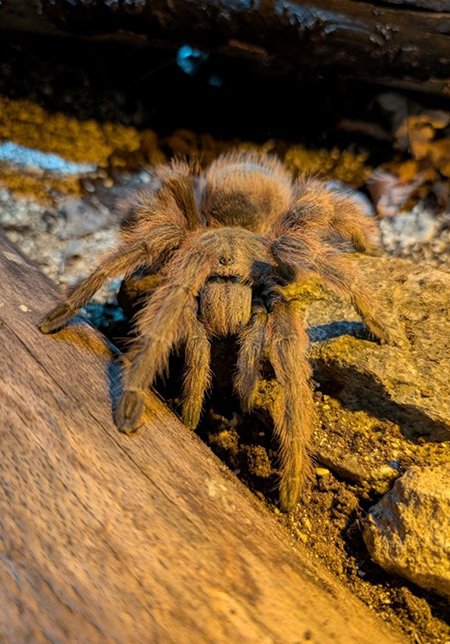
Thank you to Meg for these photos of the spiders: Mexican Red Knee (top left), Brazilian Blonde (above right) and Chilean Rose (above left).
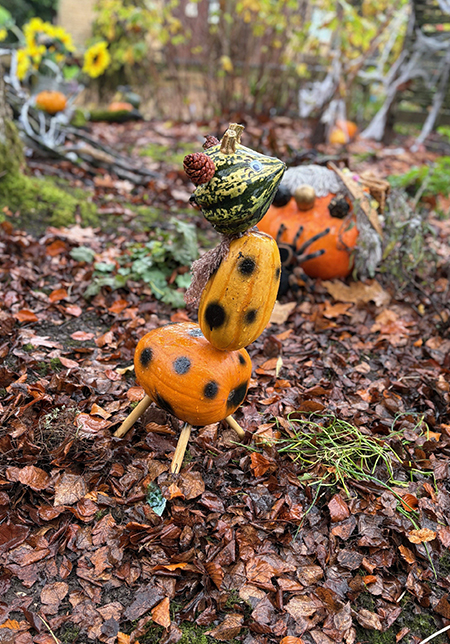
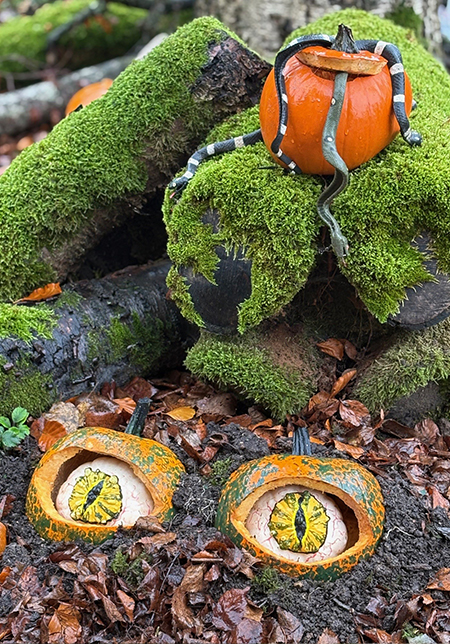 The pumpkins our Gardening team collected recently from Jubilee Gardens have now been carved and are on display in this year’s Pumpkin Patch by the Children’s Farmyard. It’s the fifth year we’ve sourced our pumpkins from Jubilee Gardens – a local charity where adults who experience varying levels of learning disability grow all sorts of wonderful produce.

Thanks to our creative staff from across the Gardens and Grounds teams, Gift Shop, Hygiene department, Restaurant team, Main Office staff, Education team and keepers for their creations in this year’s Pumpkin Patch.
We’ve also invited the students and volunteers from the Jubilee Gardens Project over to the Park to see the pumpkins they grew and nurtured from seed transformed into this year’s display. To find out more about the Jubilee Gardens Project, please visit: jubileegardens.co.uk

EXTRA, EXTRA!
Keep an eye out for us on BBC’s Children In Need night on 14th November as we might just make an appearance alongside a very special yellow bear with an eyepatch!
VISITOR INFORMATION: We are currently open until 4:00pm or DUSK (whichever is earlier), with last admission at 3:00pm, from Sunday 26 October onwards.
*Please note: Bella the train will be taking her winter break for essential maintenance from Monday November 3rd until the spring.