


This August, the Park has been celebrating “Rhino Month” with the focus of educating visitors about our crash and raising funds towards Rhino conservation. Keepers welcomed visitors to our Rhino-themed stall where they could purchase raffle tickets to win an encounter at the Park, as well as teddies and other goodies.
Thanks to the generosity of visitors, we raised nearly £1,000 – our highest total for “Rhino Month” ever. Your continued support with fundraising events such as this are incredibly important to the Park, as the donations you make allow us to continue to support conservation charities such as Tusk, which you can read more about here www.tusk.org.

Photo credit: Rebecca Louise
The breeding program for Southern White Rhinos has been incredibly successful here at the Park, with 11 calves born over the last 10 years. Some of the older calves that have moved on to other collections have now become parents themselves, continuing the amazing work of conserving this species and raising awareness of the importance of Rhino conservation.
Our current crash includes: our breeding male Monty, Nancy and Ruby – the two breeding females, and their calves Molly, Queenie, Henry and Susie. This August also marked the 2nd birthdays of the two youngest members of the ‘crash’ with Henry turning two on 12th August and Susie celebrating exactly one week later, on 19th August.

Photo credit: Rebecca Louise
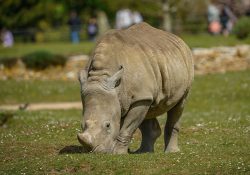
Photo credit: Rebecca Louise
DID YOU KNOW?
They are not actually white in colour, but rather grey. The name “White Rhino” is thought to be a mispronunciation of the Afrikaans word “wyjd” meaning wide, which refers to their wide mouths that help them to graze on grasses efficiently.
In contrast, Black Rhinos have more of a beak-shaped mouth, tending to feed more on shrubs and branches.
This August also saw 48 White Stork chicks released into the wild as part of the White Stork Project. Cotswold Wildlife Park has been part of the project for the last nine years, successfully managing the captive breeding of the group and release of the chicks each year.
Keepers provide nesting materials in the spring to the adult birds, then each pair will select the most desirable sticks and twigs – even stealing from each other’s nests to ensure they construct the best nest possible! Once the chicks hatch, the Keepers assist-feed to ensure optimal growth and development during the crucial phase of the young storks’ lives.

Once fully fledged and separated from the adults, the young birds are weighed, sexed, microchipped and fitted with highly visible leg rings to make them easily identifiable after their release.
You can read more about the White Stork Project here and watch a video of this year’s release on the White Stork Project Instagram page here
 This summer we welcomed the fourth cohort of our Zoo Keeper Academy to the Park for a week of theory based learning and practical activities.The week-long educational experience is designed for young people aged 15-18 who are considering a career in animal care or conservation. Participants took part in practical husbandry duties, learnt about aspects of a zookeeper’s role including animal health and enclosure design, had a go at designing enclosures and implemented enrichment for some of the animals.
Each of the participants gave 100% effort to every activity this year and developed some useful skills in the process. We even had one of our very first participants from 2022 speak to the group about her experiences since completing the course. The places for the 2026 Keeper Academy will go on sale in November and more information can be found on our website here.

EXTRA EXTRA!
 If you have visited the Park lately, you may have seen our Peahens strolling around proudly with their new chicks in tow.
Our free-roaming Peafowl family has grown significantly in the last year with three chicks hatching recently and several more chicks joining the group this June.
You can often see the two Peahens gathering together with their chicks over on the Children’s Farmyard or taking a walk near the Walled Garden.