


Once a common sight in the skies across Britain, White Storks disappeared as a breeding species back in the 1400s. Habitat loss and over-hunting contributed to their demise. The fact that they often featured as a delicacy on the menus of medieval banquets may further explain their decline. After centuries of being associated with good luck and new life, these once-revered birds were persecuted in the English Civil War for being associated with rebellion and became a symbol of insurgency. Their future looked bleak and it appeared inevitable that the sight of White Storks gracing Britain’s skies would forever be confined to history books.
Thanks to a pioneering rewilding scheme, hope is on the horizon that these graceful birds may soon make a spectacular return. The White Stork Project is the first rewilding programme of its kind in the UK. It aims to re-establish a wild, breeding population of White Storks with least 50 breeding pairs across the south of England by 2030. Along with project partners, the Roy Dennis Wildlife Foundation, Knepp Castle Estate and private landowners in Sussex, Cotswold Wildlife Park has been involved with the White Stork Project since its inception in 2016.
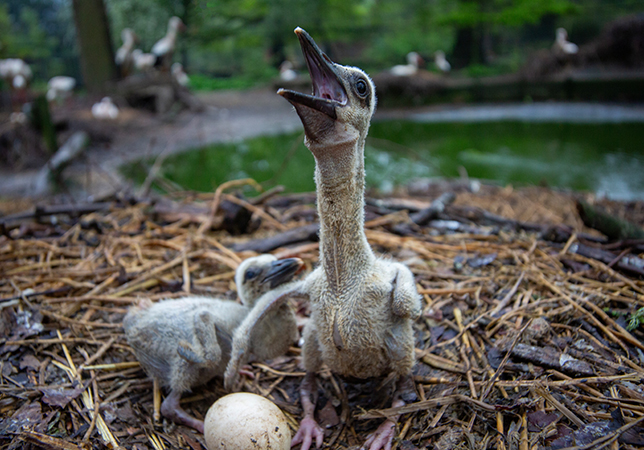
Photo credit: Philip Joyce
For the eighth year running, the Park has successfully bred White Stork chicks for the project. 2025 was the most successful breeding season in the collection’s history, with a record-breaking 48 chicks reared. This year’s hatched in May and were recently transferred to Sussex for release into the wild. Cotswold Wildlife Park has now bred over 200 birds for the White Stork Project.
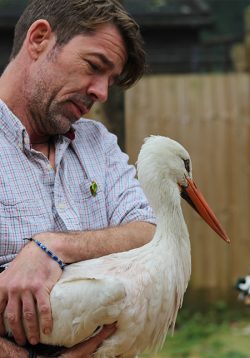 Jamie Craig (pictured left), Curator of Cotswold Wildlife Park, explains the history of the Park’s involvement: “We received our first batch of birds in late 2016. This enabled us to set up a breeding group of fifty storks at the Park and also send enough birds to our project partners in Sussex to establish small sedentary groups there. All these birds were imported from Warsaw Zoo in Poland and are rehabilitated injured birds from the wild that, unfortunately, could not be released due to disabilities that would have affected their chances of survival had they been returned to the wild”.
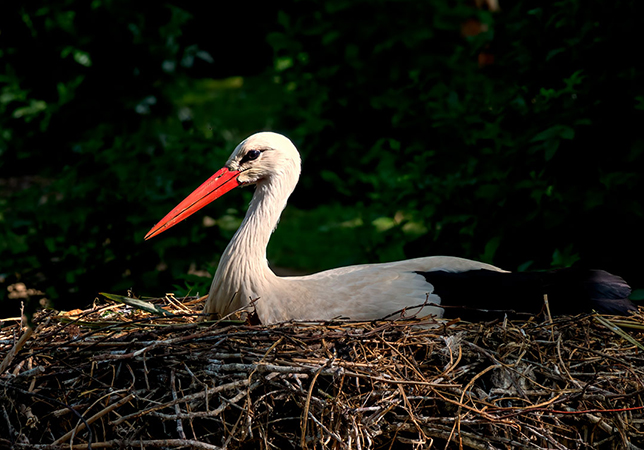
Photo credit: Philip Joyce
After being quarantined, they were moved into the Park’s large, netted exhibit. Jamie adds: “Two further imports bolstered numbers and we could now wait for our birds to settle and mature before the serious business of breeding could begin. White Storks begin showing pairing and breeding behaviours in late winter and it is at this time that the dedication of their keepers is vital. Enormous quantities of nesting material must be added constantly whilst the pairs build their huge nests and careful selection of twigs, sticks and other favoured materials is needed. Each pair will show a preference and they are certainly not averse to stealing material from other pairs if it appeals to them more than the items they initially selected”.
Careful observation is essential to ensure all birds complete their nests to the husbandry team’s satisfaction. Egg laying is also monitored. Jamie said: “After approximately 35 days, the chicks will hatch and the keepers then assume the role of “fairy godmother” to the chicks and the adults. Although the adults will bring a good supply of food to the nest for the young, the keepers also assist feed – visiting each nest daily with quantities of finely chopped feed items, usually fish and insects, to ensure that each chick’s chance of survival is optimised, and the workload of the parents with large clutches is not too exhausting. The young birds grow rapidly and by around two months of age, the birds will fledge the nest and become independent”.

Photo credit: Rebecca Louise
Once they have left the nest, the young birds are separated from the adults, sexed and given identification rings. After a two-week settling period to ensure all birds are strong and healthy, they are transferred to one of the release pens in Sussex. Several of the new cohorts are fitted with trackers so they can be carefully followed and monitored on their release.
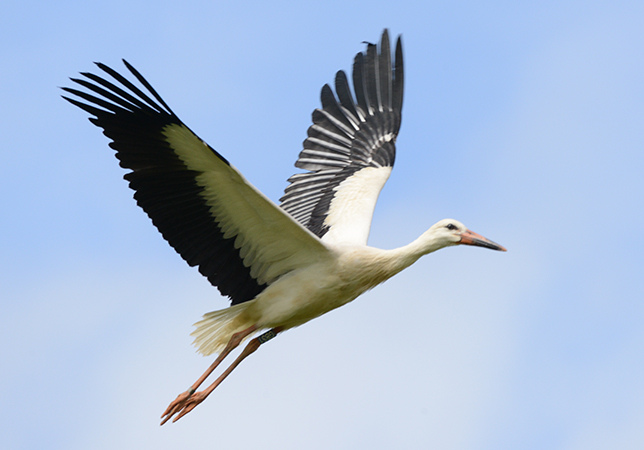
Photo credit: Rory Carnegie
Jamie commented: “So far, we have transferred over two hundred young storks to Sussex for release. Many have successfully crossed the Channel and followed traditional migration routes down through Europe and into Africa. Storks do not return to their nesting ground until they have matured at four years, so we are all hoping for the first Cotswold Storks to return to England and become a permanent breeding fixture in the landscape once again”.
All birds involved in the White Stork Project have unique coloured rings on their legs. Anyone who spots a White Stork in the British countryside can report their sightings here: www.whitestorkproject.org/report-a-sighting
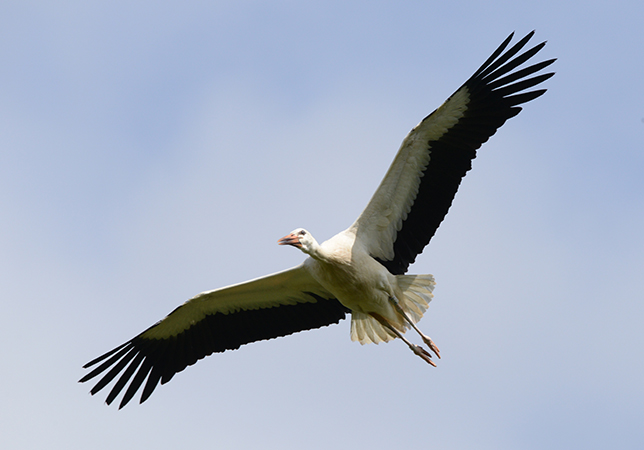
Photo credit: Rory Carnegie
Additional information:
- Reintroduction programmes have successfully returned White Storks to France, the Netherlands and Poland where wild populations build their towering stick nests in villages and towns.
- In Europe, they are so beloved and considered such a sign of good luck that people erect cartwheels on their roofs to attract them. During a particularly cold snap in Bulgaria back in 2018, villagers even sheltered White Storks in their homes.
- As of 2025, the White Stork Project has become part of the European Stork Village Network. Knepp Estate and the nearby town of Storrington have been designated the UK’s first ‘Stork Village’.
- These charismatic birds have long been a symbol of hope and new life. They have featured in fables and folklore throughout history. Ancient Greek and Roman mythology portrayed them as models of parental devotion and the bird is featured in at least three of Aesop’s Fables. Ancient Greeks also held that killing a stork could be punished with death. Their popularity continued across Europe throughout the medieval era when folklore told stories of babies being delivered by these elegant, long-legged birds – an image which is synonymous with storks to this very day. One of the most famous examples is Disney’s 1941 animated classic Dumbo, which opens with a stork delivering bundled babies to their circus animal parents. Hans Christian Andersen also popularised this belief in his 19th century story “The Storks”.
- The last definitive record of storks raising chicks in Britain was in 1416 when two nested in St Giles’ Cathedral in Edinburgh.
To find out more about The White Stork Project, please visit: www.whitestorkproject.org
Cotswold Wildlife Park is actively involved in conservation in the wild. The White Stork Project is one of several conservation programmes the Park supports. Please visit www.cotswoldwildlifepark.co.uk/conservation for more information.
The Park’s breeding group of White Storks are on show in the walk-through area next to the Children’s Farmyard.