

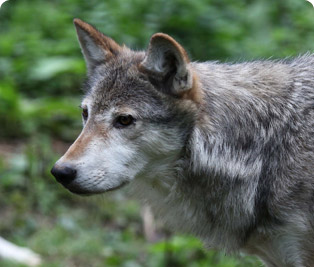
(Canis lupus occidentalis )
STATUS
Least Concern
SIZE
Up to 102cm high and 2.1m long. Males of the subspecies typically weigh between 45kg and 80kg with females weighing a bit less.
AGE
Up to 16 years.
HABITAT & DISTRIBUTION
They are a highly adaptable species and can be found in a wide range of habitats from temperate forests, mountains, tundra, taiga and grasslands. There are 36 different subspecies of grey wolf found around the North of America and Eurasia. The ones we have at the Park originate from Alaska and the northern Rocky Mountains of Canada and the United States.
WHAT THEY EAT
Wolves are carnivores and have a varied (meat based!) diet including deer, caribou, musk ox, beaver, sheep, mountain goat, fish, birds, carrion, bison, and small mammals.
They are a highly adaptable species and can be found in a wide range of habitats from temperate forests, mountains, tundra, taiga and grasslands. There are 36 different subspecies of grey wolf found around the North of America and Eurasia.
Animal Facts
- The domestic dog is a direct descendent of the wolf and was first domesticated 12,000 years ago.
- Wolf hunting is legal in most of the area where our wolves originate from. Up to 20 per cent are hunted every year but the population is so large that it is thought that up to 40 per cent could be hunted before it affected their population prospects.
- This subspecies is an extremely efficient hunter. It has long powerful legs to allow it to travel through rough terrain and a very large lung capacity. This means that this wolf can travel up to 70 miles a day to find food, and can reach speeds of nearly 40 miles per hour.
- Wolves have scent glands between their toes, which allow them to navigate easily and keeps others informed of their whereabouts.